HARLEM — In a sermon that quickly spread across social media, a prominent Harlem pastor delivered a blistering critique of former President Donald J. Trump, drawing parallels between Mr. Trump and Venezuela’s embattled leader, Nicolás Maduro.
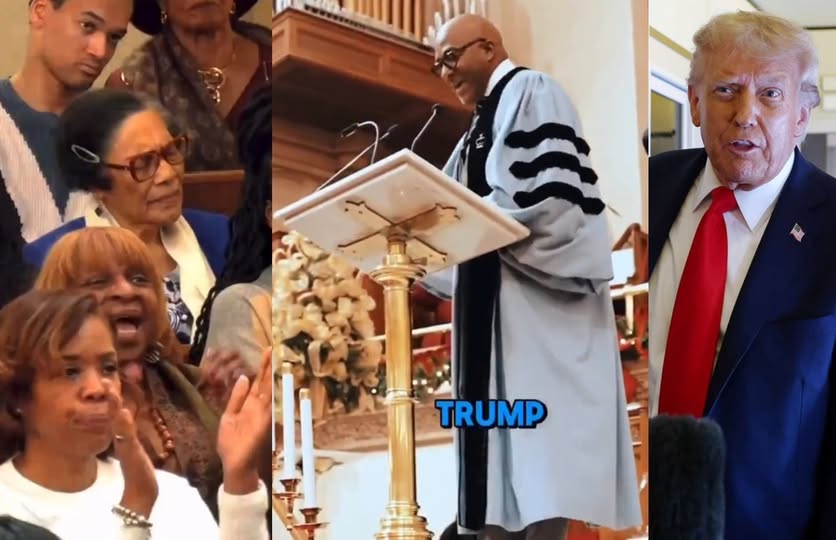
From the pulpit of the historic Abyssinian Baptist Church, Reverend Kevin Johnson, senior pastor of the 217-year-old congregation, spoke with a congregation visibly attentive to his message. In remarks circulating widely online, Mr. Johnson acknowledged widespread criticisms of Mr. Maduro’s government, known for its authoritarian tactics and economic turmoil, but he went further — arguing that similar accusations could be leveled at Mr. Trump.
“America, we’ve got to wake up,” Mr. Johnson said. “I don’t doubt that Nicolás Maduro is a thug and that he has engaged in corruption and electoral manipulation — but so has Mr. Trump.”
The sermon, which has been viewed millions of times on platforms including X, featured a series of pointed comparisons. Mr. Johnson said that, in his view, both leaders had silenced critics, sought personal enrichment, and wielded legal systems in ways that benefited themselves.
The pastor’s message resonated with some who feel unease about the United States’ recent military actions in Venezuela — a high-stakes operation that resulted in Mr. Maduro’s arrest and transfer to the United States on narcotics and weapons charges. Venezuelan officials and other critics have condemned the operation as an illegal “kidnapping,” a characterization echoed outside the courtroom as protests and diplomatic objections have mounted.
Political sermons are not new to Black churches in America, where religious leaders have long engaged with civil rights, social justice, and public policy. But Mr. Johnson’s raw juxtaposition of an American political figure with a foreign authoritarian was unusual in its bluntness, quickly igniting debate online and beyond.
Supporters praised Mr. Johnson’s courage in confronting what they see as a dangerous erosion of democratic norms at home, while critics argued that mixing sharply partisan political commentary with religious discourse risked oversimplifying complex international affairs and domestic politics alike.
The sermon highlights broader tensions over U.S. foreign policy in Latin America, questions about executive power, and the role of religious institutions in national political debates — issues sure to persist as the fallout from Venezuela’s leadership change continues to unfold on the world stage.