Estonia Raises Alarm After Russian Jets Breach Airspace, Calls for NATO Talks
Global concern rose yesterday after Estonia accused Russia of violating its airspace, in what European officials say could be one of the most serious incidents since the start of the Ukraine war.
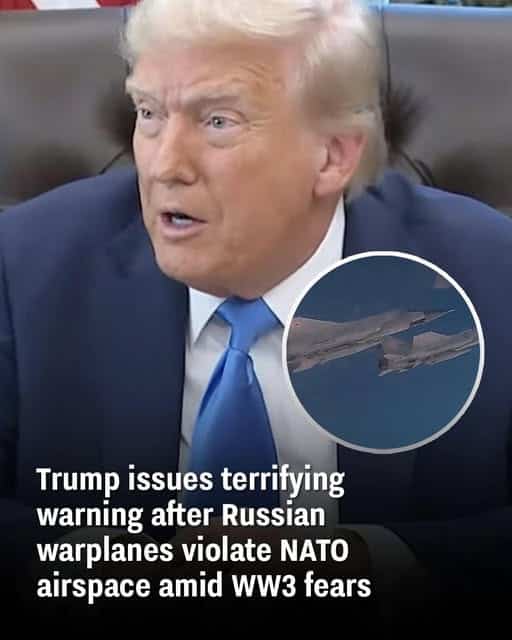
According to Estonia’s Foreign Ministry, three Russian MiG-31 fighter jets entered Estonian skies without clearance, remaining for nearly twelve minutes before returning. Estonia described the act as “brazen” and moved to trigger NATO’s Article 4 consultations, a rarely used clause that signals a member feels directly threatened.
Silent and Deliberate
Estonian defense officials reported that the aircraft:
Analysts noted such a maneuver is not accidental but designed to test defenses. Retired NATO commander Col. James Whitaker said: “This was no navigational error. Three jets entering, refusing communication, and lingering for over ten minutes is a deliberate signal.”
Estonia Responds
Tallinn acted swiftly, summoning a senior Russian diplomat and filing a formal protest. Foreign Minister Margus Tsahkna stressed this was the fourth violation in 2025 but the most serious yet. Defense Minister Hanno Pevkur added that Estonia had requested urgent consultations with allies under Article 4.
What Article 4 Means
Article 4 of the NATO treaty allows members to call consultations whenever territorial integrity or security is under threat. While it does not obligate military action, it underscores the gravity of a situation and seeks a collective response. A NATO spokesperson confirmed the North Atlantic Council will meet early next week.
Trump’s Warning
U.S. President Donald Trump reacted cautiously but firmly, telling reporters: “It could be big trouble.” The ambiguous remark left room for interpretation—part deterrence, part restraint. Observers noted that Trump’s words mirror Washington’s effort to support Estonia while avoiding immediate escalation.
Escalation in the Baltics
The Baltic states — Estonia, Latvia, and Lithuania — have long lived with unease since Russia’s 2022 invasion of Ukraine. As small frontline nations bordering Russia, even minor incursions stir alarm. Last week, Poland reported Russian drones entering its territory.
“This was not a lone aircraft straying,” said Pevkur. “It was coordinated intimidation.”
International Reactions
-
Poland called the move “a reckless escalation.”
-
Lithuania’s President Gitanas Nausėda called it “a direct challenge to NATO.”
-
Germany and France urged restraint while pledging support.
-
Russia, by contrast, downplayed the event, calling it “routine training” and any violation “unintentional.”
Rising Fears, Calls for Restraint
Analysts warn such incidents increase the risk of miscalculation. “One nervous pilot, one misunderstood order, and the situation could spiral,” said Dr. Elena Kovacs of the European Security Institute.
Yet experts also stressed the importance of measured responses. Invoking Article 4 is meant to signal unity and deterrence, not immediate war. The last major use came in 2014 after Russia’s annexation of Crimea.
Between Pressure and Prudence
Trump’s phrasing — warning of “big trouble” but stopping short of promises — reflects the balance between deterrence and escalation. “The message is: we are watching, we stand by allies, but we won’t be rushed into reckless steps,” said retired Gen. Robert Langston.
What Comes Next
NATO leaders are expected to consider:
-
Enhanced Baltic air patrols.
-
Additional sanctions on Russia.
-
Stronger warnings that repeat violations could trigger Article 5.
Estonia insists the matter cannot be ignored. “Every violation chips away at sovereignty,” said Tsahkna. “This one was different. It cannot be swept aside.”
Conclusion
As tensions rise in Eastern Europe, the world watches closely. Estonia’s move to invoke Article 4 highlights both the risks of escalation and the alliance’s determination to consult before reacting.
The incident is a stark reminder of the fragility of peace: small provocations can grow into larger confrontations. What is needed now — alongside firmness — is wisdom, restraint, and an awareness that even in times of fear, the choice between escalation and de-escalation remains in human hands.