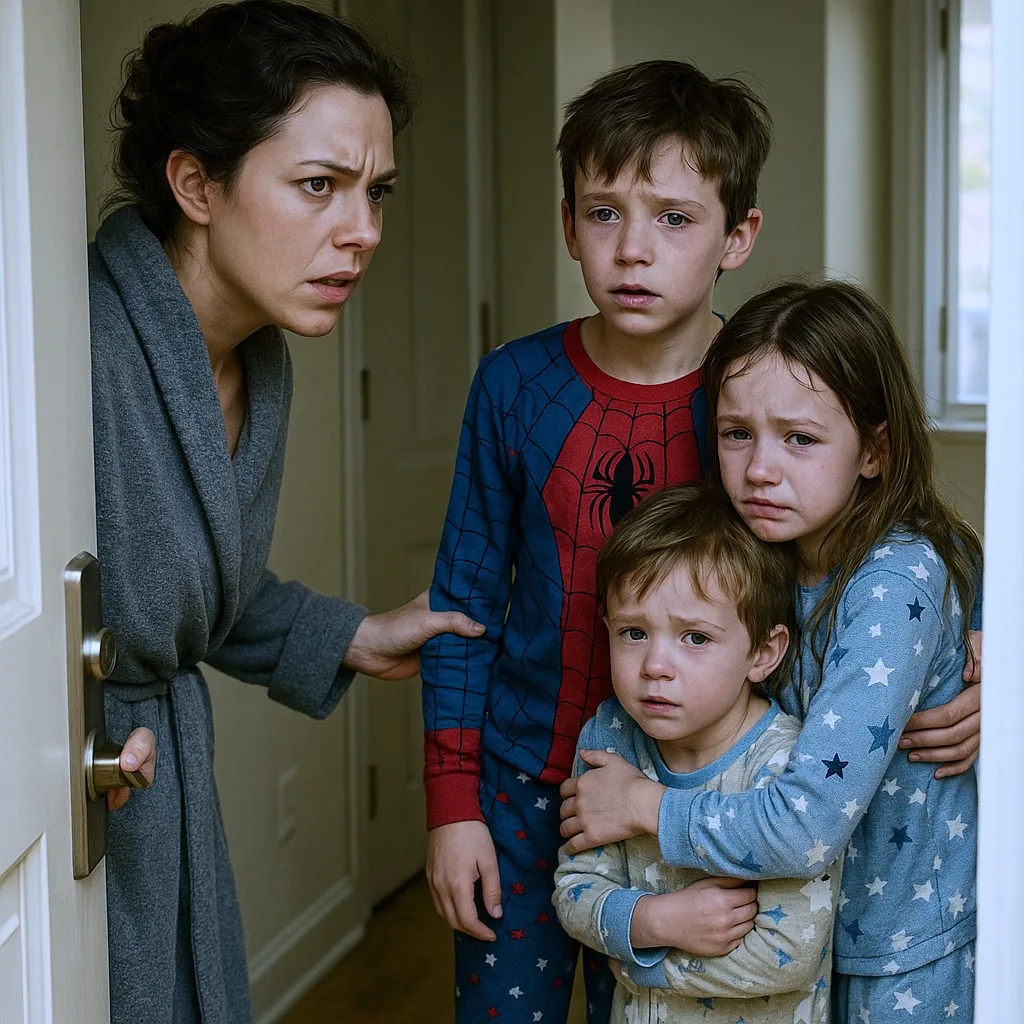
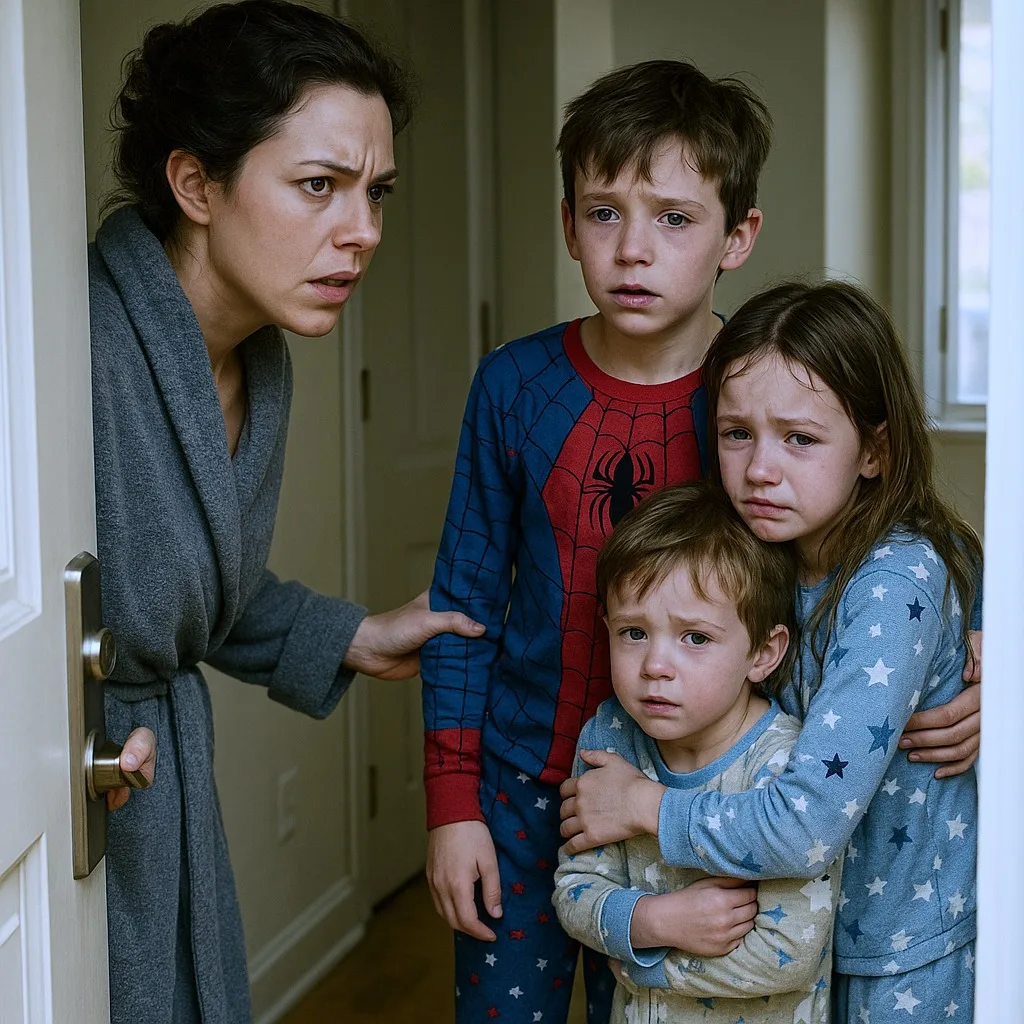
A sharp knock cleaved the quiet of my apartment, a jittery, frantic tapping that didn’t belong to the hour or the season. I jolted awake, the digital clock burning 3:17 a.m. into my blurry vision. The February cold seeped through the windows, the kind that feels older than winter itself.
Then came the voice—thin, trembling, and too grown-up for a child.
“Ariel, please… we’re so cold.”
Every cell in my body lurched. I stumbled through the dark, nearly slamming into my coffee table, heart thundering as I reached the door. Through the peephole, three small shapes huddled together like a single shivering creature. I threw the deadbolt open.
Nathan, twelve, stood in front. His pajama shirt clung to him, soaked in sweat and winter air. Sophia clutched Owen’s tiny hands, her socks torn and gray from walking on frozen pavement. Their lips were the color of bruised petals.
“Where are your parents?” I asked, my voice shaking more than theirs.
Nathan swallowed. “They locked us out.”
Four miles. No coats. Eighteen degrees. And the walk had stolen more than warmth from them—it had taken something quiet and innocent, something I could feel slipping through my doorway when I pulled them into the heat of my apartment.
I work as a guidance counselor at Riverside Middle School—my days are a rotation of crisis plans, trauma disclosures, and children trying to survive storms they didn’t ask for. I teach kids how to navigate the dark corners of their world. But nothing prepares you for when the darkness shows up barefoot at your own door.
Dennis, my older brother, had always been difficult to define. Brilliant but flaky. Warm but unreliable. The kind of man who could charm a stranger and disappoint the people who loved him most. His wife, Vanessa, floated through motherhood like it was an optional subscription she forgot she’d signed up for.
Over the years, little signs surfaced—a late pickup here, forgotten meals there, the kids showing up at family gatherings already exhausted. But whenever I got close to asking real questions, Dennis would flash a smile and say, “We’re fine. Just busy.”
Tonight erased the thin excuses I’d let myself believe.
Inside my apartment, the kids curled on my couch under every blanket I could find. Owen stopped crying, his face hollow and distant. Sophia’s foot was an angry, blistering red. Nathan sat hunched over, clutching the hot cocoa I’d made, steam rising in small, shaky clouds.
“How long were you outside?” I asked gently.
Sophia answered with chattering teeth. “A long time.”
Long enough for the cold to find their bones. Long enough that they learned no one was coming for them.
Nathan spoke in fragments. Anger poured into my chest with every detail. They’d been knocking for twenty minutes—cold, scared, invisible to the two people supposed to protect them. When no one answered, they made a decision no child should ever have to make: they walked. Past dark streets. Past empty bus stops. Past their fear.
I tried calling Dennis. Straight to voicemail. Vanessa too.
The kids ate crackers and thawed slowly. Owen drifted to sleep, still wrapped tight like a fragile package someone had abandoned. Sophia leaned against my arm, whispering, “Nathan makes us dinner when Mom forgets.”
Nathan’s shoulders curled in, as if he were apologizing. “Sometimes it’s cereal. Sometimes… nothing. But I try.”
I’d taught dozens of mandated reporters how to identify neglect. Now I was living it, watching it unravel in front of me like a slow-motion disaster I’d ignored too long.
“Has this happened before?” I asked.
Nathan stared into his mug. “Not exactly this.”
“Tell me.”
“Sometimes Mom and Dad just… don’t come home when they say they will.”
“How long?”
“Hours. Sometimes all night.”
“And they told you never to tell anyone,” I said quietly.
Nathan nodded. “Dad said foster care breaks up families. He said if anyone knew how things were… we’d be taken.”
It was the kind of manipulation that grafts guilt onto a child’s heart like a parasite.
I walked to the kitchen, closed the door, and stared at my phone. I knew the hotline number by memory—every counselor does. But calling it for your own family feels like stepping off a cliff.
I pressed the button anyway.
“Emergency intake. What’s your situation?”
“My brother’s three children walked four miles in freezing temperatures,” I said. “Their parents are missing. The children show signs of chronic neglect. They are in immediate danger.”
Saying it aloud broke something in me—not regret, but the illusion that things would ever return to what they were.
CPS arrived just after sunrise—a woman named Rita Carson and a partner with quiet eyes and steady hands. They examined the kids, asked questions with a gentleness that contrasted sharply with the storm they’d arrived to sort out.
Dennis showed up three hours later, smelling faintly of beer, confusion clouding his eyes before panic replaced it. Vanessa trailed behind him, hair perfect, excuses already forming on her lips.
“What the hell, Ariel?” Dennis shouted. “Why did you call CPS?”
I pointed to the couch, to the blankets, to the blistered feet and hollow eyes. “Because your children walked four miles in the cold at two in the morning.”
“We just stepped out,” Vanessa insisted. “They could’ve waited.”
“They are children,” I said, each word steady as stone.
Rita stepped forward. “Mr. and Mrs. Turner, we’ll be placing the children in protective custody for now.”
Sophia burst into tears. Nathan wrapped his arms around his siblings as if he could shield them from everything about to happen. Dennis looked at me with something shattering in his expression—anger, yes, but also fear, regret, maybe even understanding.
“You didn’t have to do this,” he whispered.
“Yes,” I said quietly. “I did.”
The kids left with CPS, holding each other’s hands so tightly their knuckles turned white. Nathan looked back once, eyes searching mine not for answers, but for reassurance that he wasn’t the one who’d broken the world open.
“You did the right thing,” I told him. “You’re safe now.”
He nodded once, small and brave, then disappeared down the hallway.Families don’t fall apart in a single night. They crumble over years—quiet neglect, missed dinners, cold shoulders, small harms brushed aside until something finally snaps.
But protection is not betrayal.
Sometimes loving your family means standing between them and the damage they’re too lost to see. Sometimes it means making the call no one else will make.
And sometimes, the deepest act of care is refusing to let children grow up believing they deserve the kind of love that forgets to open the door.